What's a fibration?
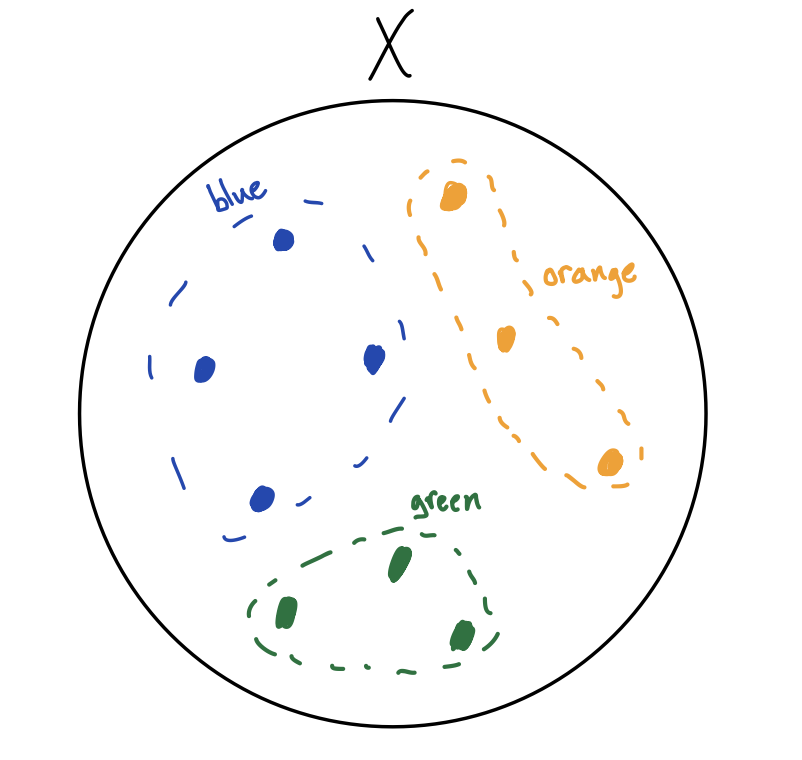
Let’s say we have a type X with some elements.
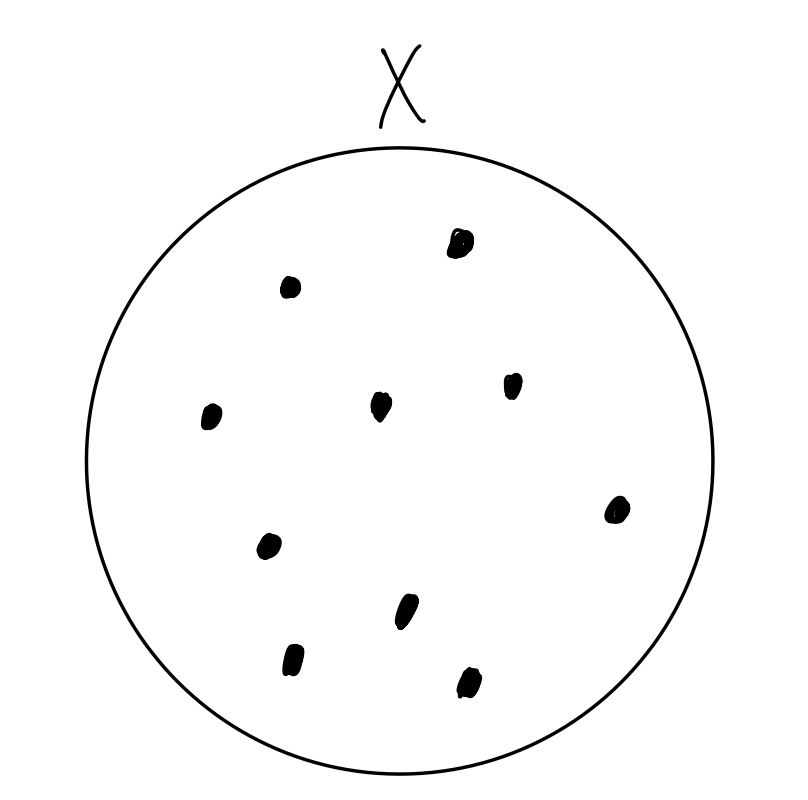
We can imagine splitting up all the elements of X into separate groups.
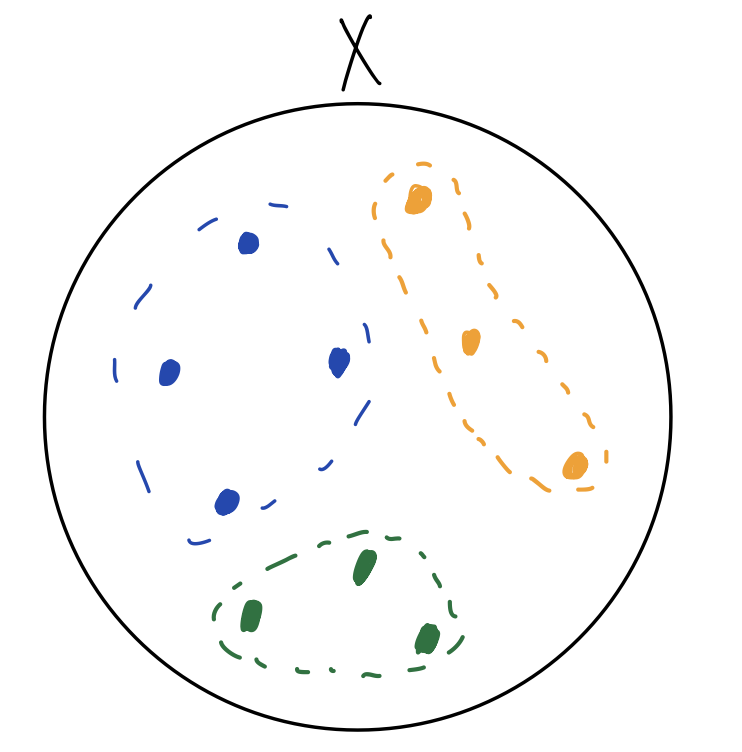
This is a fibration. We call each imagined grouping a fiber. So this fibration of X has three fibers.
We can have other fibrations of X:
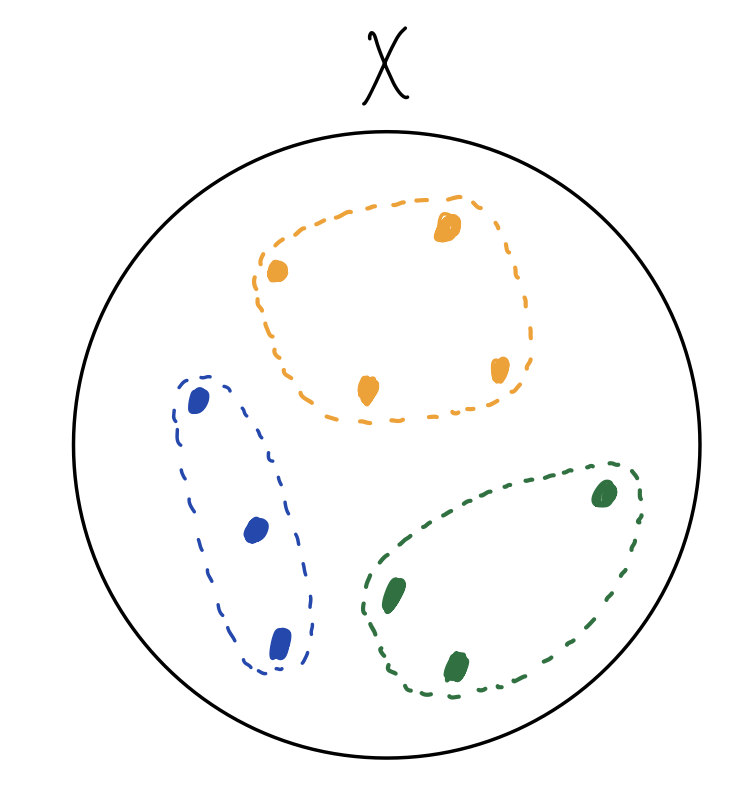
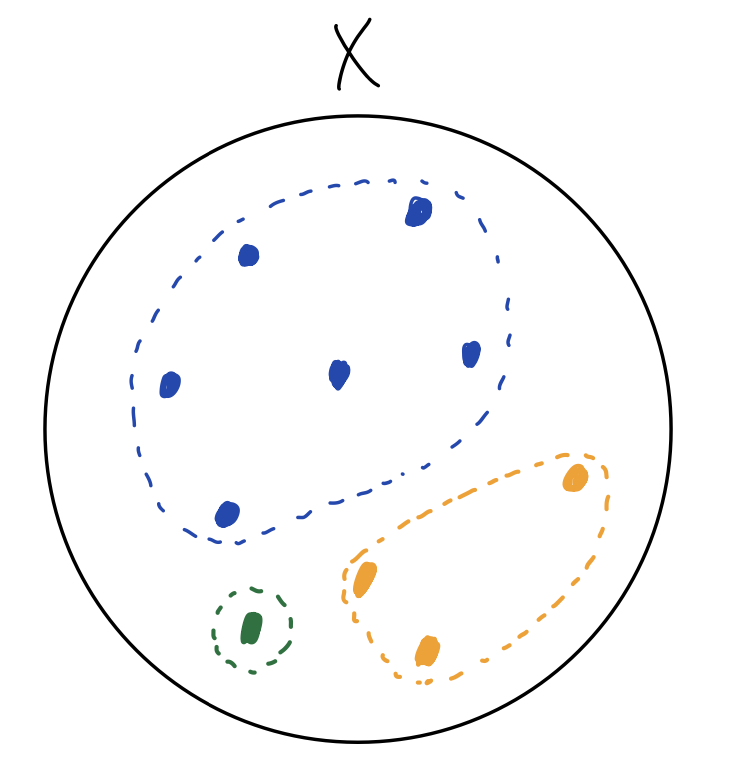
Both of these fibrations of X have three fibers.
Describing fibrations
Now we would like to be able to describe a fibration nicely. We begin by giving a name to each fiber. We name ours blue, orange, and green.
We can now create a function from X to {blue, orange, green} that assigns to each element of X the name of the fiber that it is in.
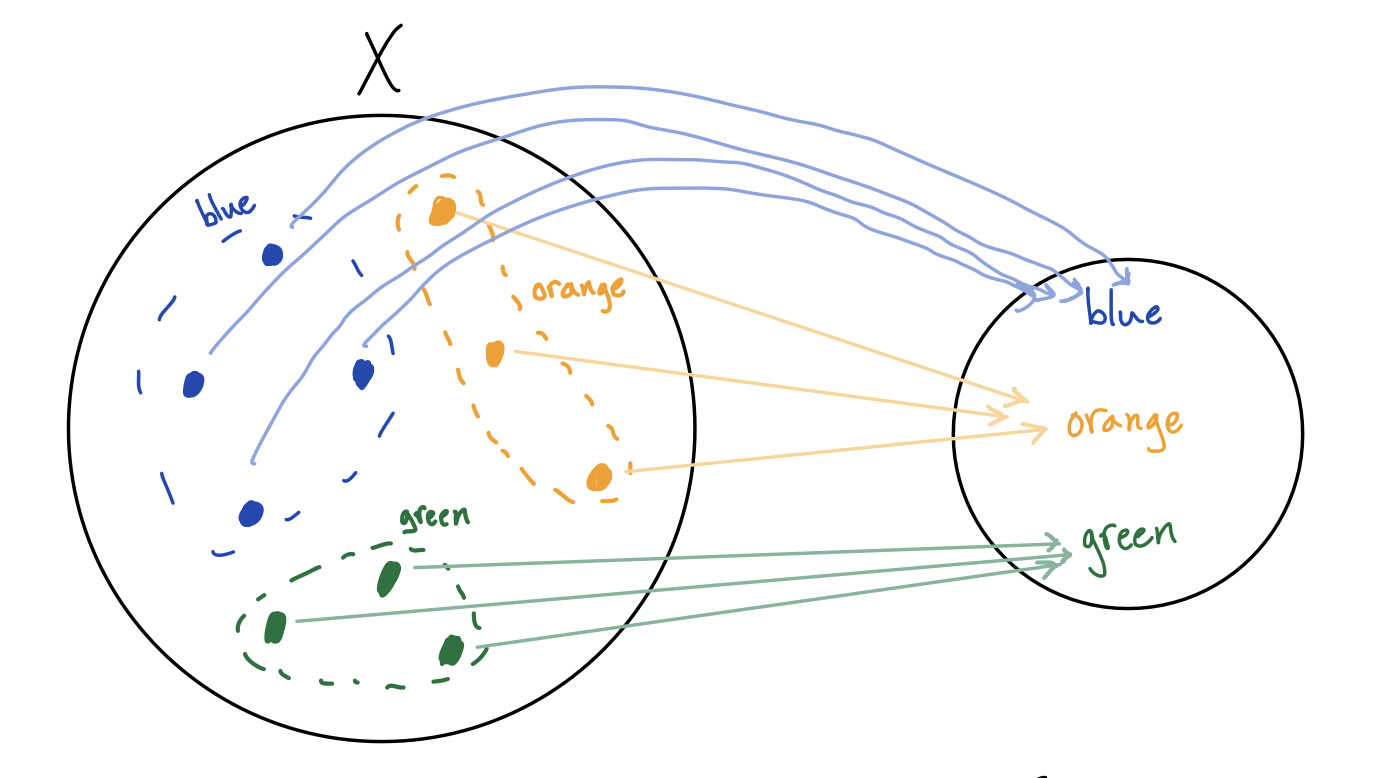
Great! This function nicely captures our fibration of X. A different function would encode a different fibration of X.
There is another way we could describe a fibration of X. We can create a function that, given the name of a fiber, returns the fiber.
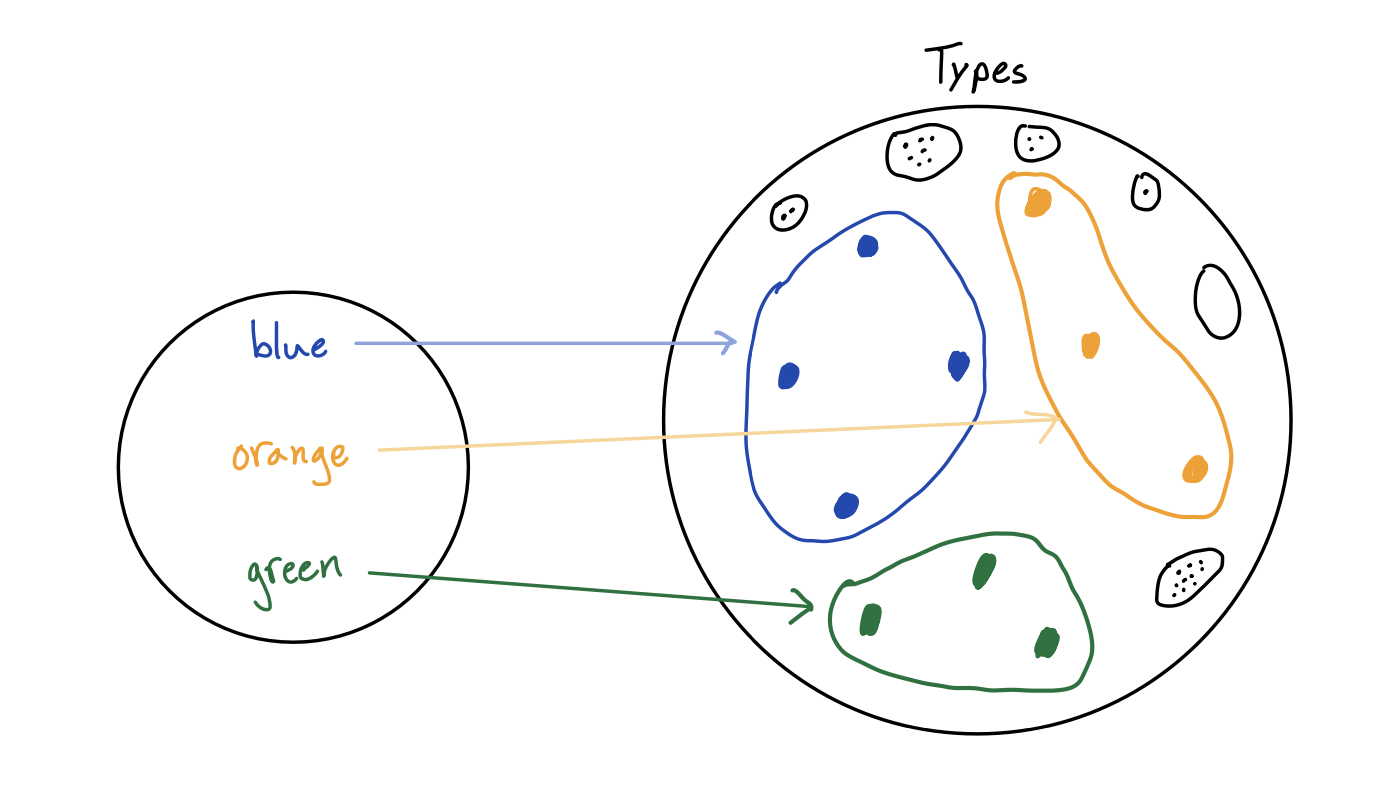
This function also captures our fibration of X. A different output for any given name would encode a different fibration.
Let’s look at a specific example. We have the type Bool × Bool of pairs of booleans:
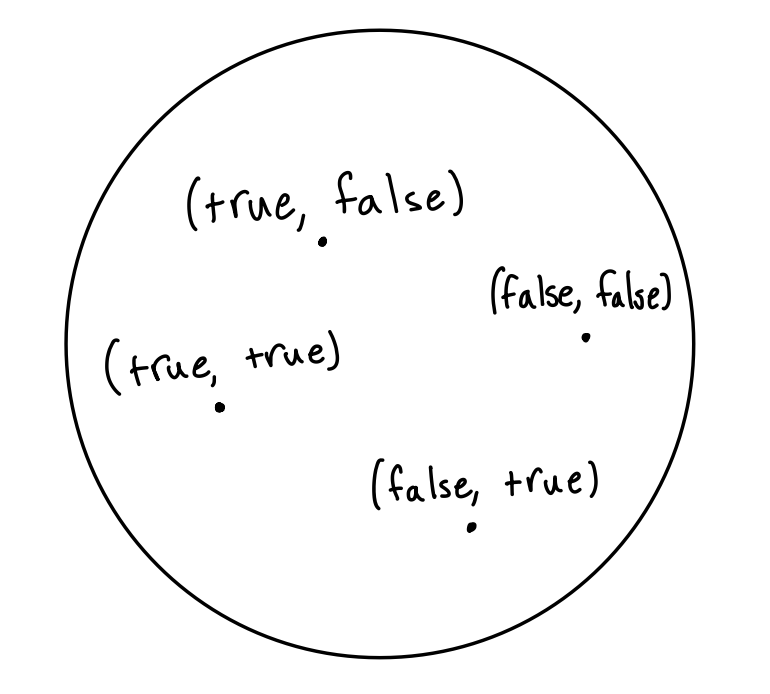
We can imagine grouping together elements whose first booleans are equal.
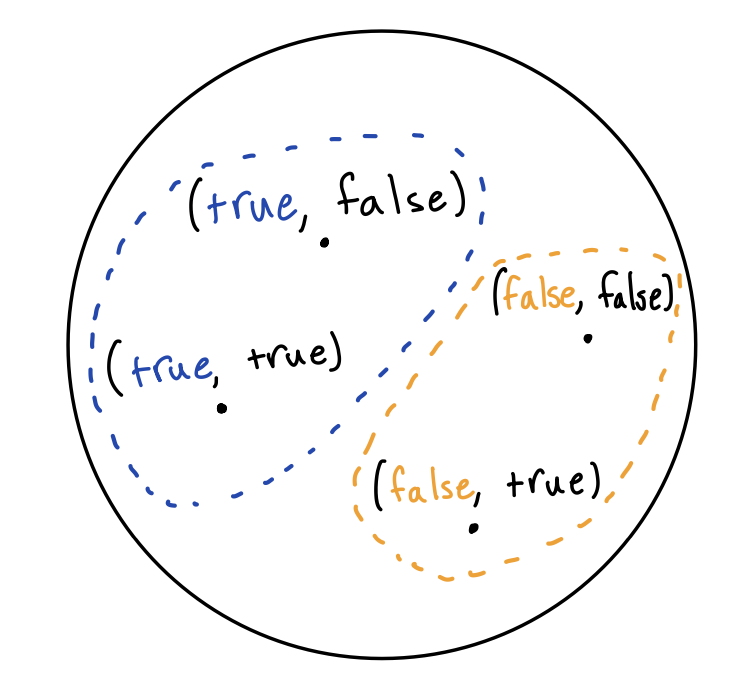
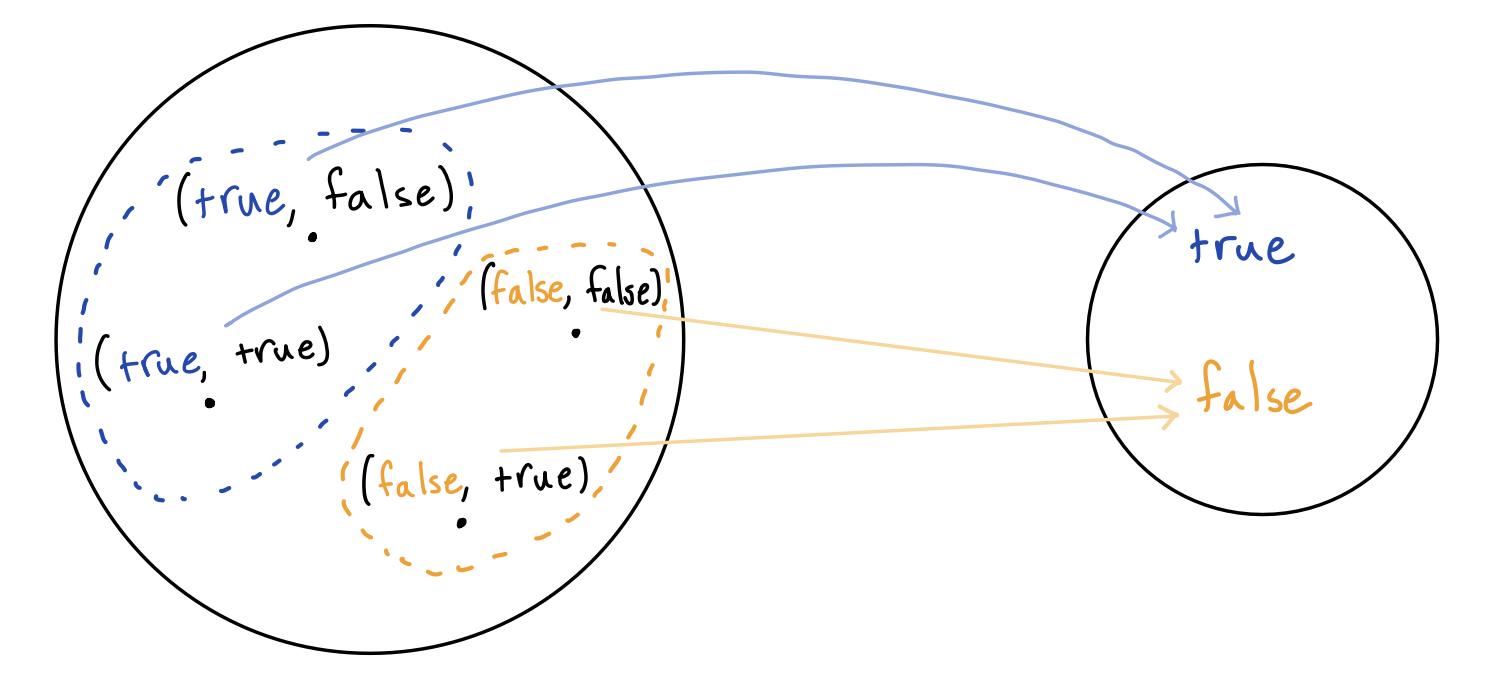
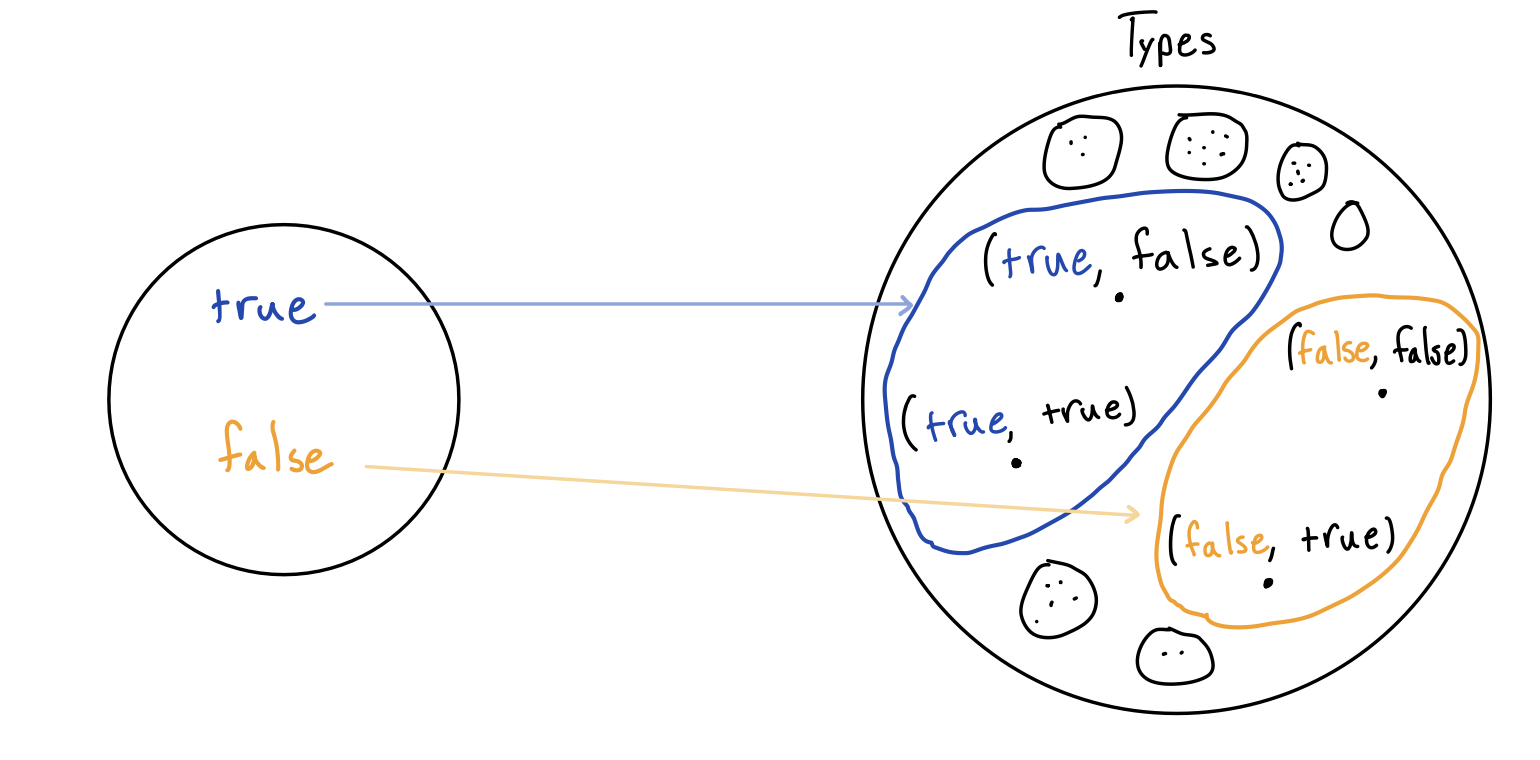
This is a fibration on Bool × Bool that has two fibers. And here are the two different ways to encode that fibration.
As a function from elements of Bool × Bool to the names of their fibers they are in:
And as a function from the names of the fibers to the entire fibers themselves:
Going backwards
Let’s say we are given some random function p from a type X to some other type Y.
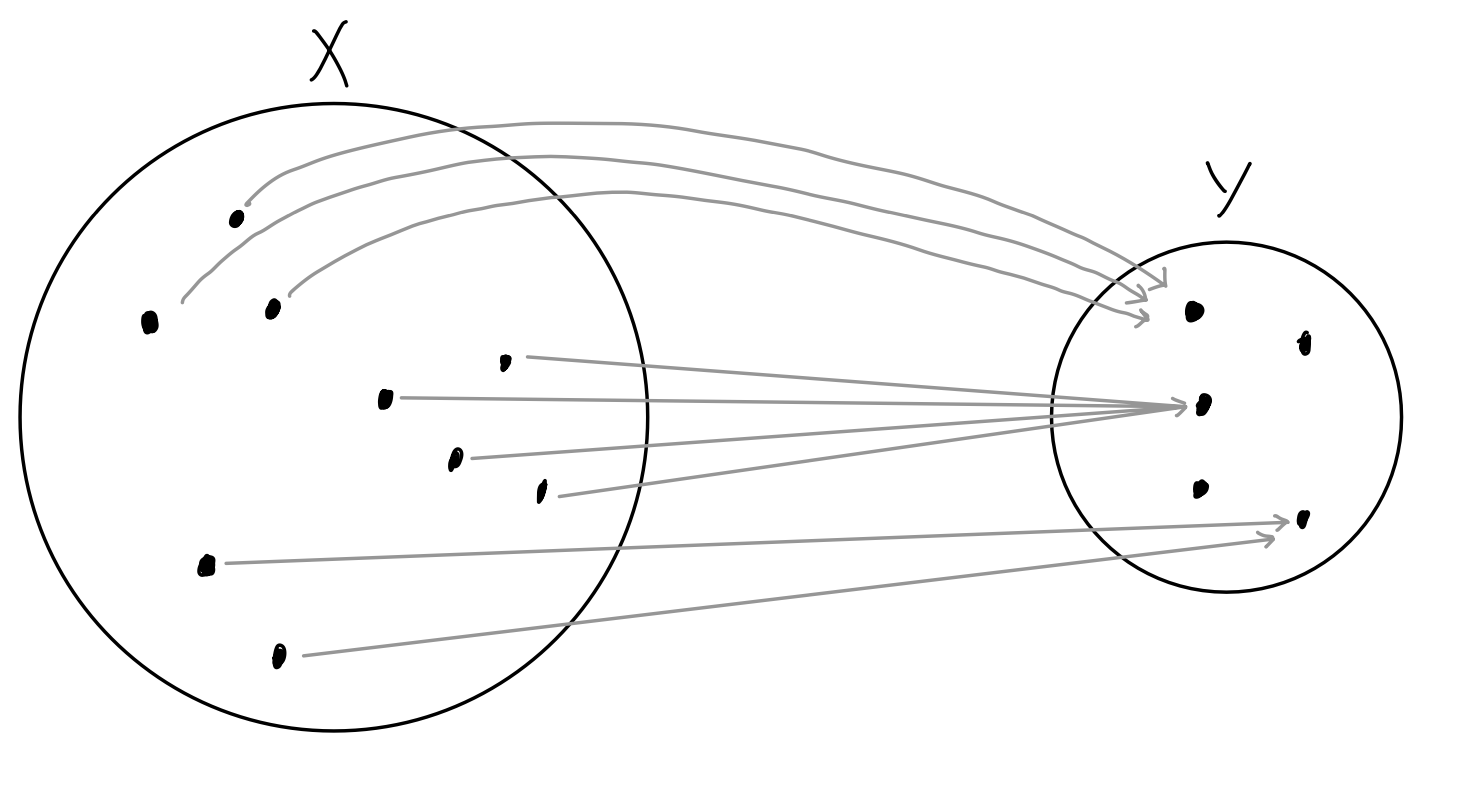
We can imagine that this function p : X → Y is actually encoding a fibration. We do this by treating Y as the type of names of each fiber. Then we get a fibration on X by imagining grouping together elements X that are given the same name by p.
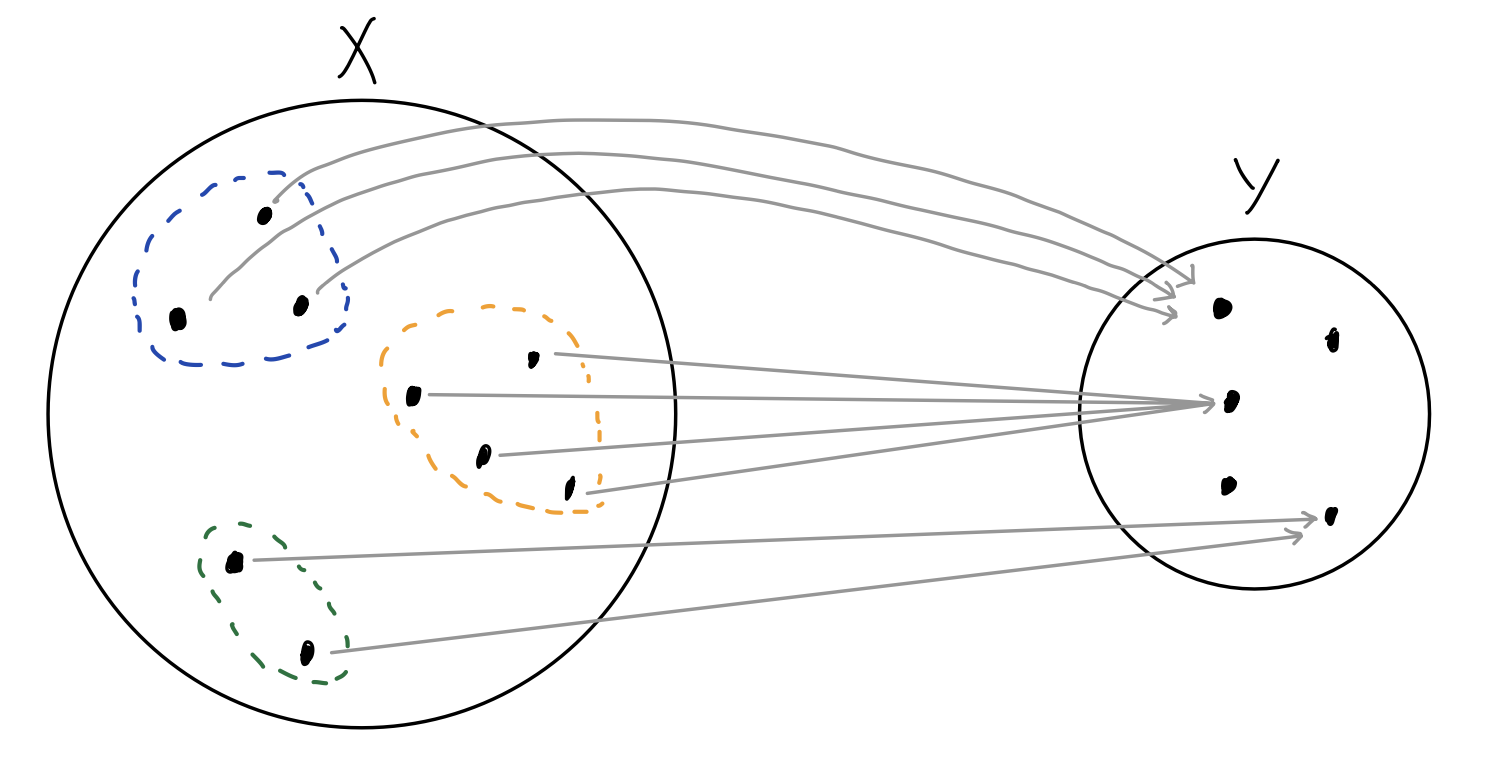
(We have some unused names in Y, but that’s ok for us.)
Now let’s say we are given a random function f from a type Y to a collection of types Type.
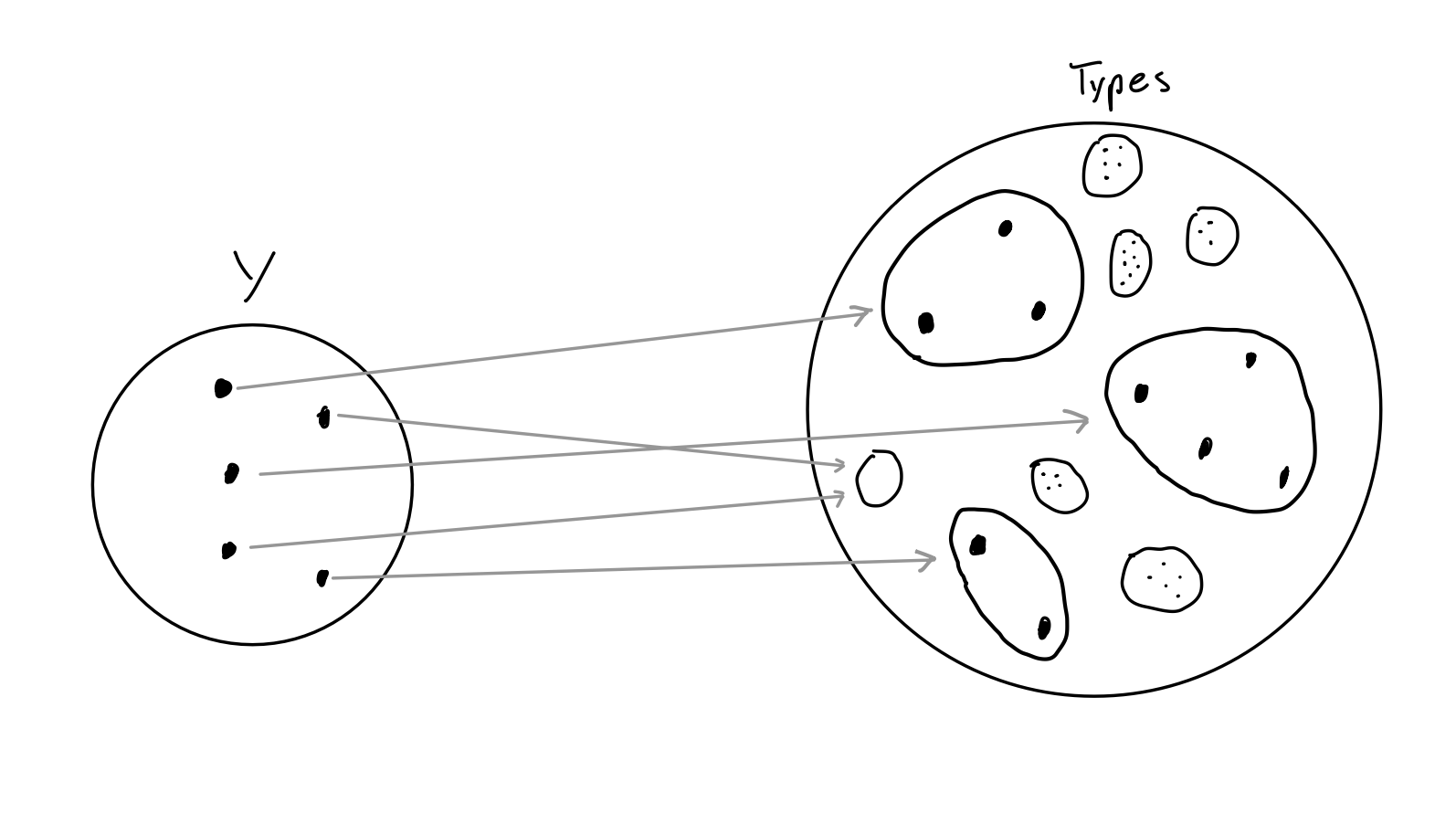
We can imagine that this function f : Y → Type is encoding a fibration. We do this by treating Y as the type of names of each fiber. And then what f maps each name to we will treat as being the entire fiber associated with that name.
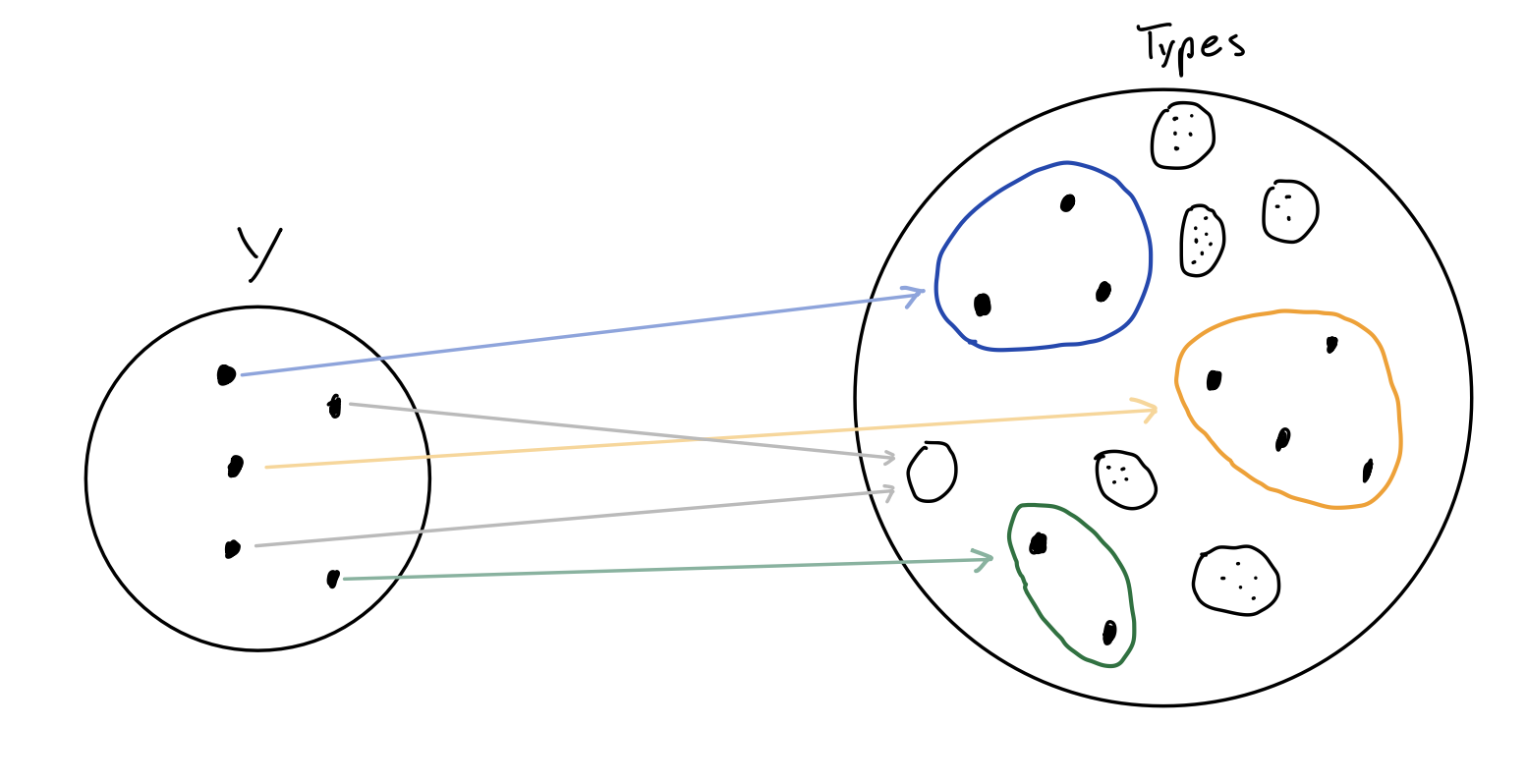
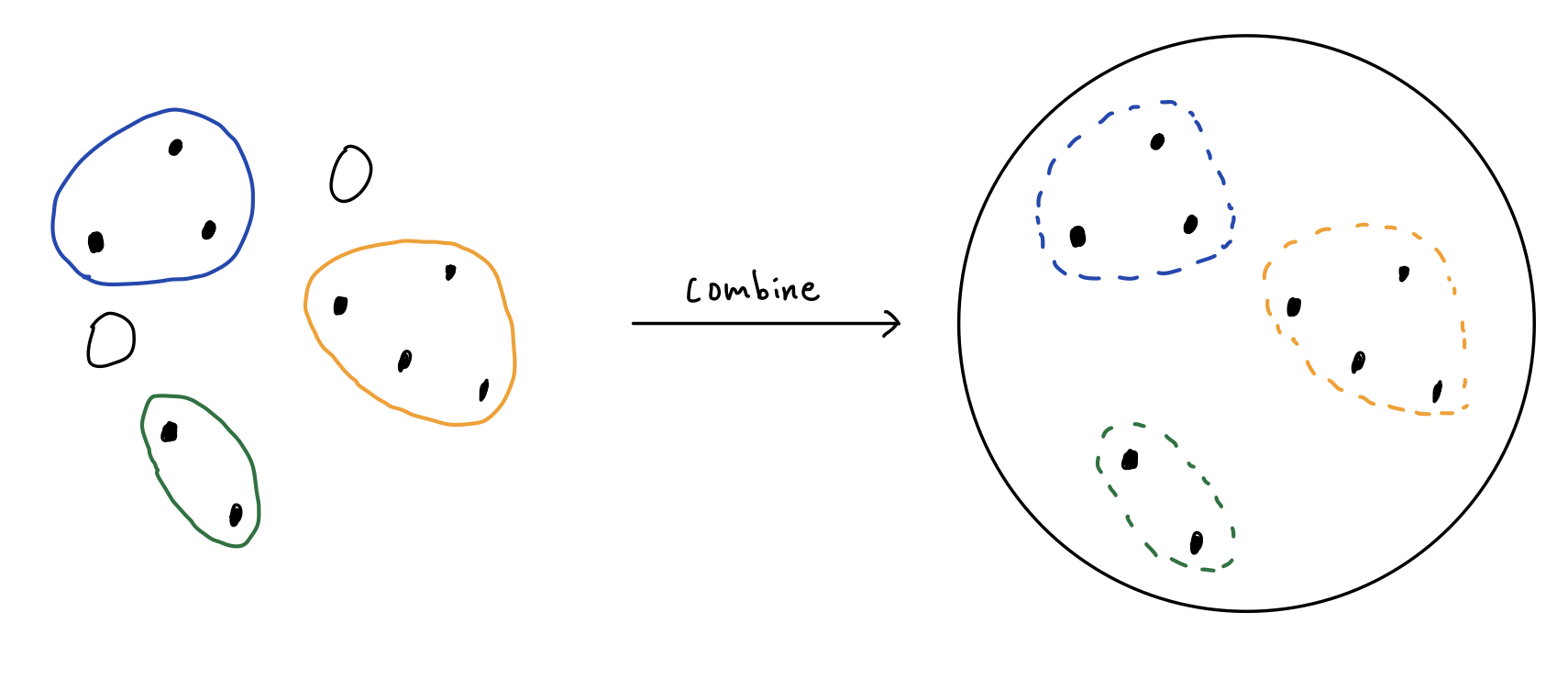
Now the type that actually has the fibration that this function f : Y → Type is encoding is built by combining all the fibers together.
Moving between
We can now take a random function, view it as encoding a fibration, switch to the other encoding of the fibration, and get back out a new function.
Let’s go through an example. We begin with a function p : Bool × Bool → Bool from pairs of booleans to a single boolean.
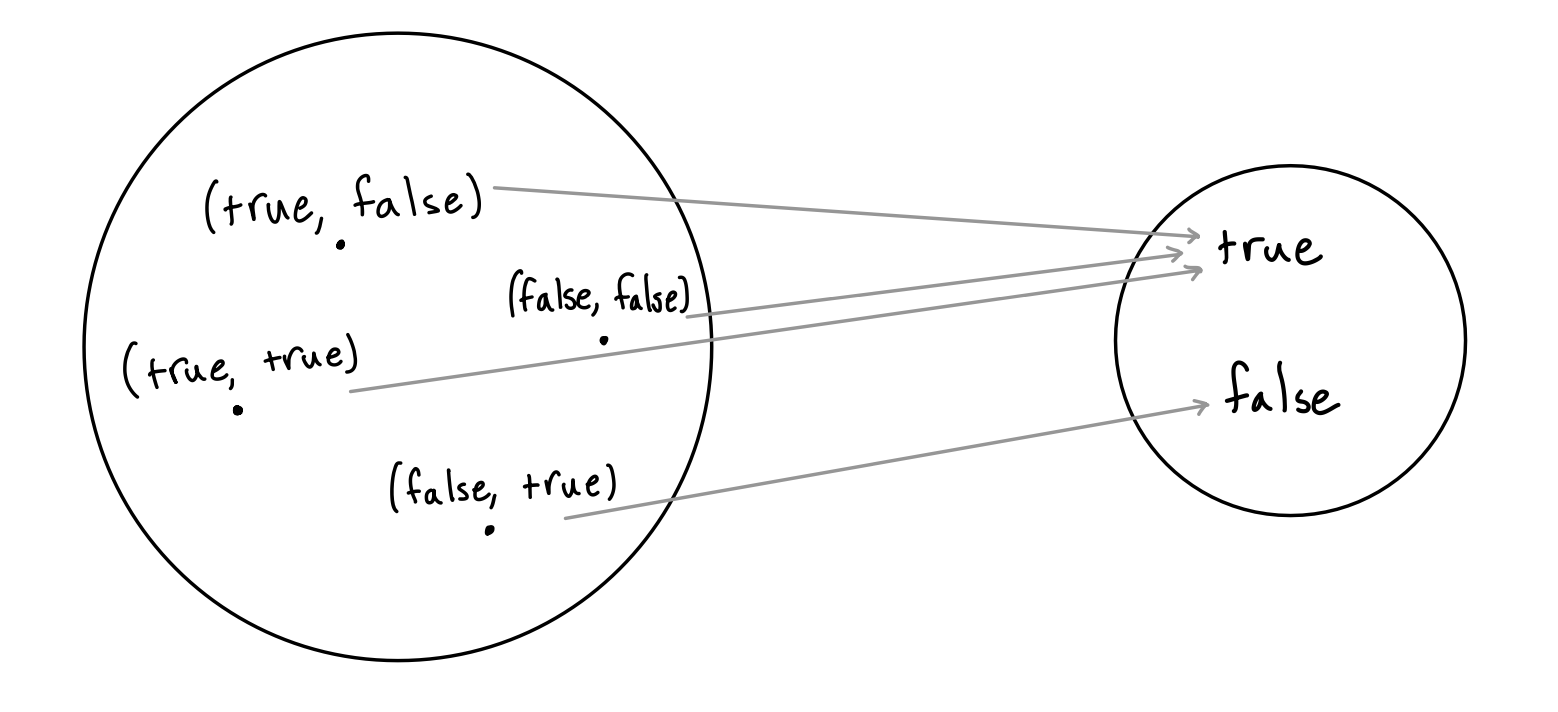
From this function p : Bool × Bool → Bool, we get this fibration on Bool × Bool.
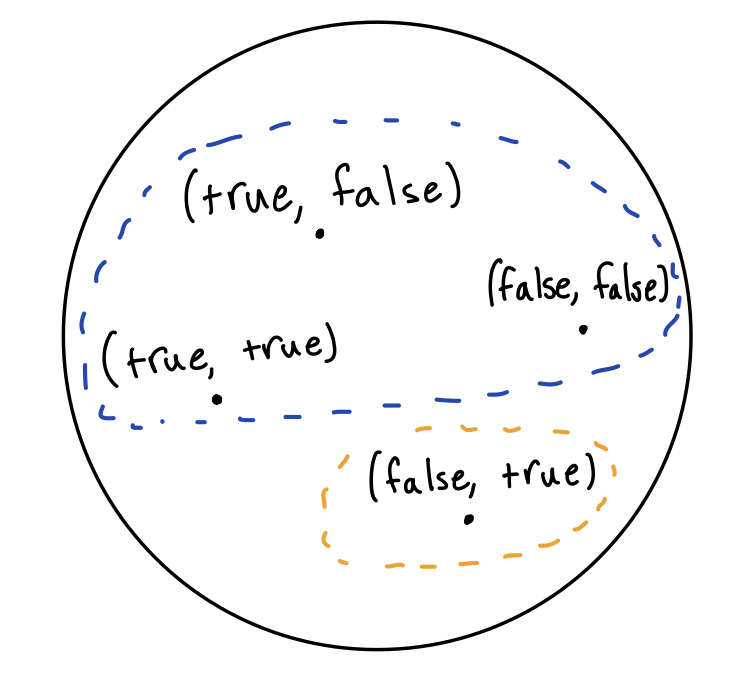
Finally, we write down the other encoding of this fibration to get a function S : Bool → Type.
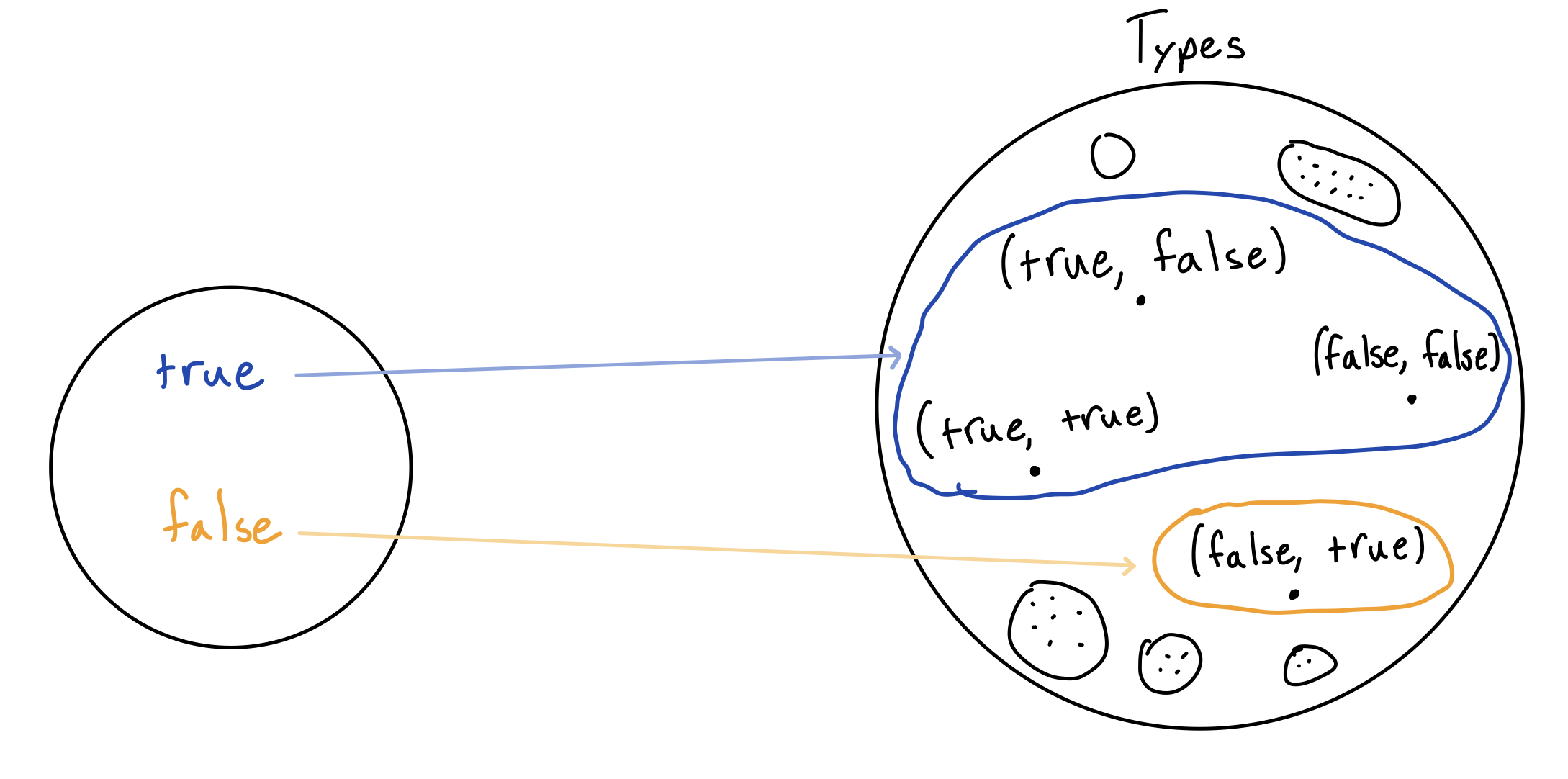
So we have turned a function p : Bool × Bool → Bool into a collection of types indexed by Bool (i.e. our function S : Bool → Type).
And that’s basically what fibrations are up to (ignoring all that path business).